NTM Knives
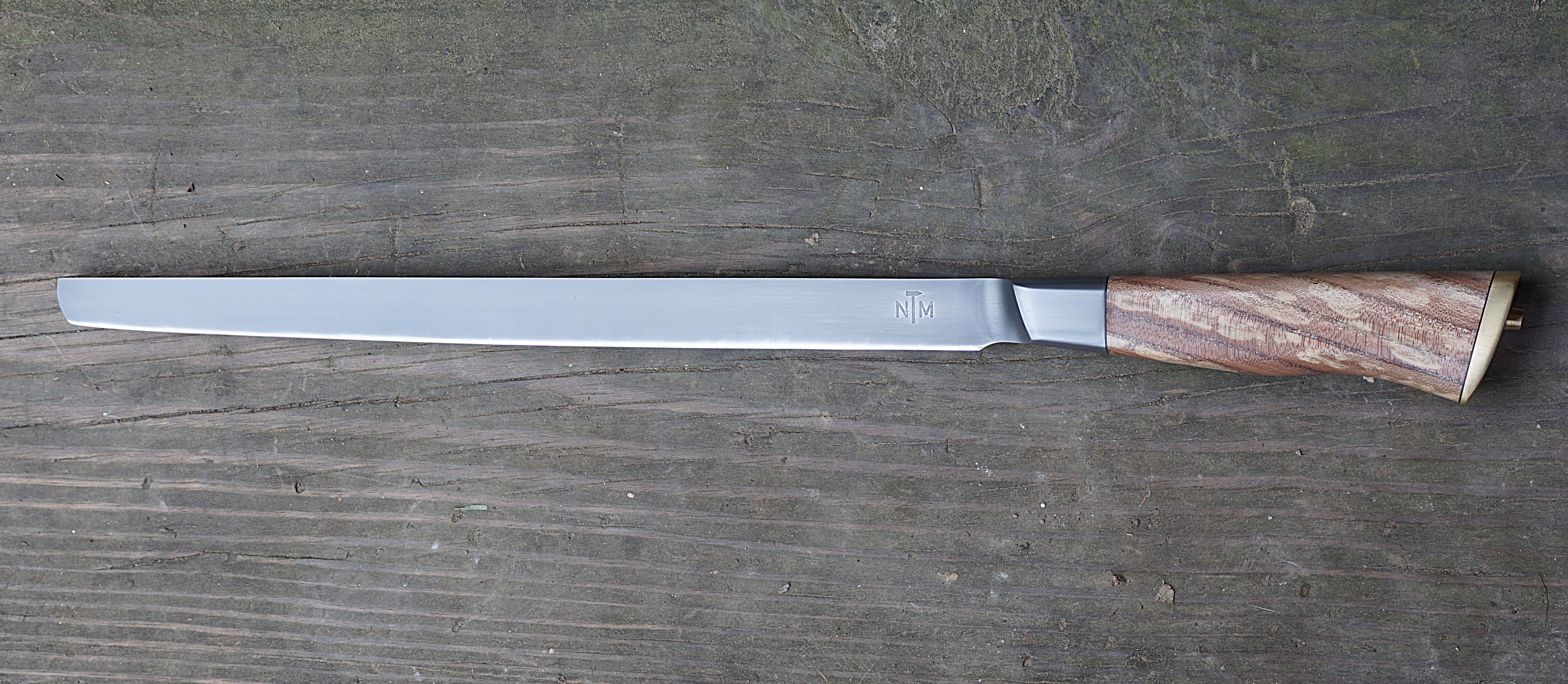
Custom kitchen and butchery knives handmade from start to finish in Fresno, Ohio.
Nate Malenke
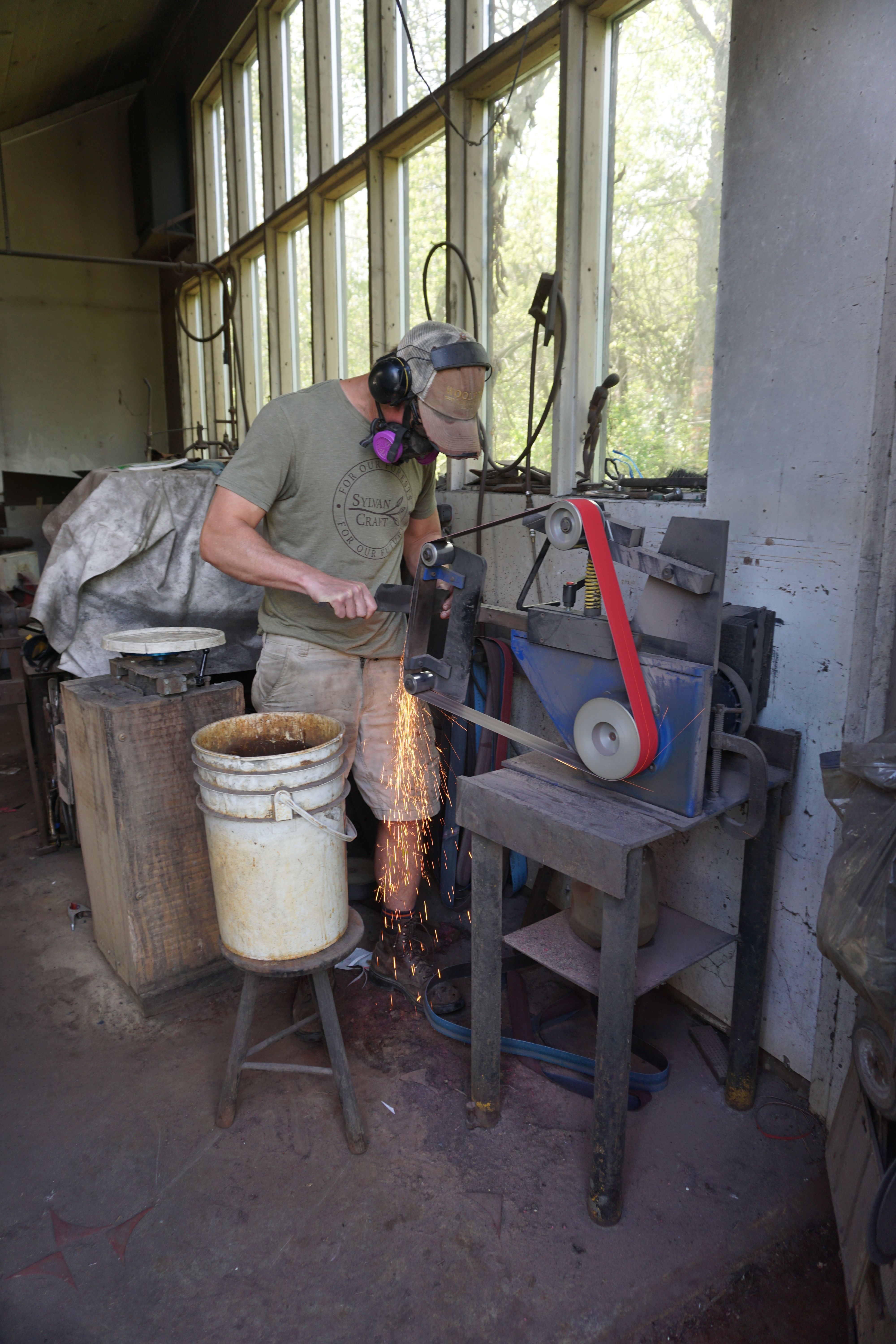
I’ve been making swords and knives in my father’s blacksmith shop since I was 10 years old. I grew up in Fresno, Ohio, moved away, moved back, and took over my father's shop. The shop houses many tools, including a forge, anvil, power-hammer, hydraulic press, drill-press, belt sander, heat-treating oven, Rockwell hardness tester, and of course, hundreds of hand tools.
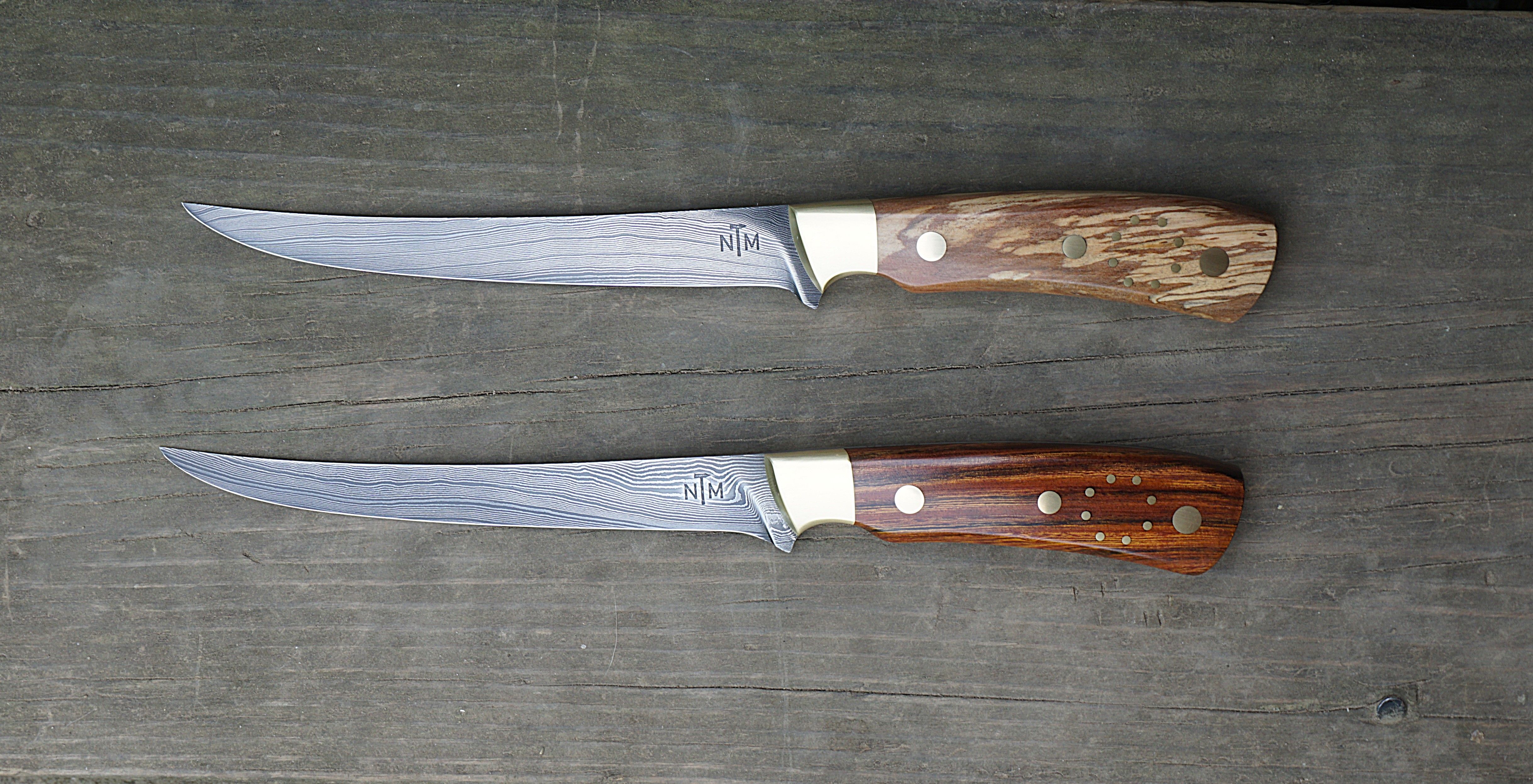
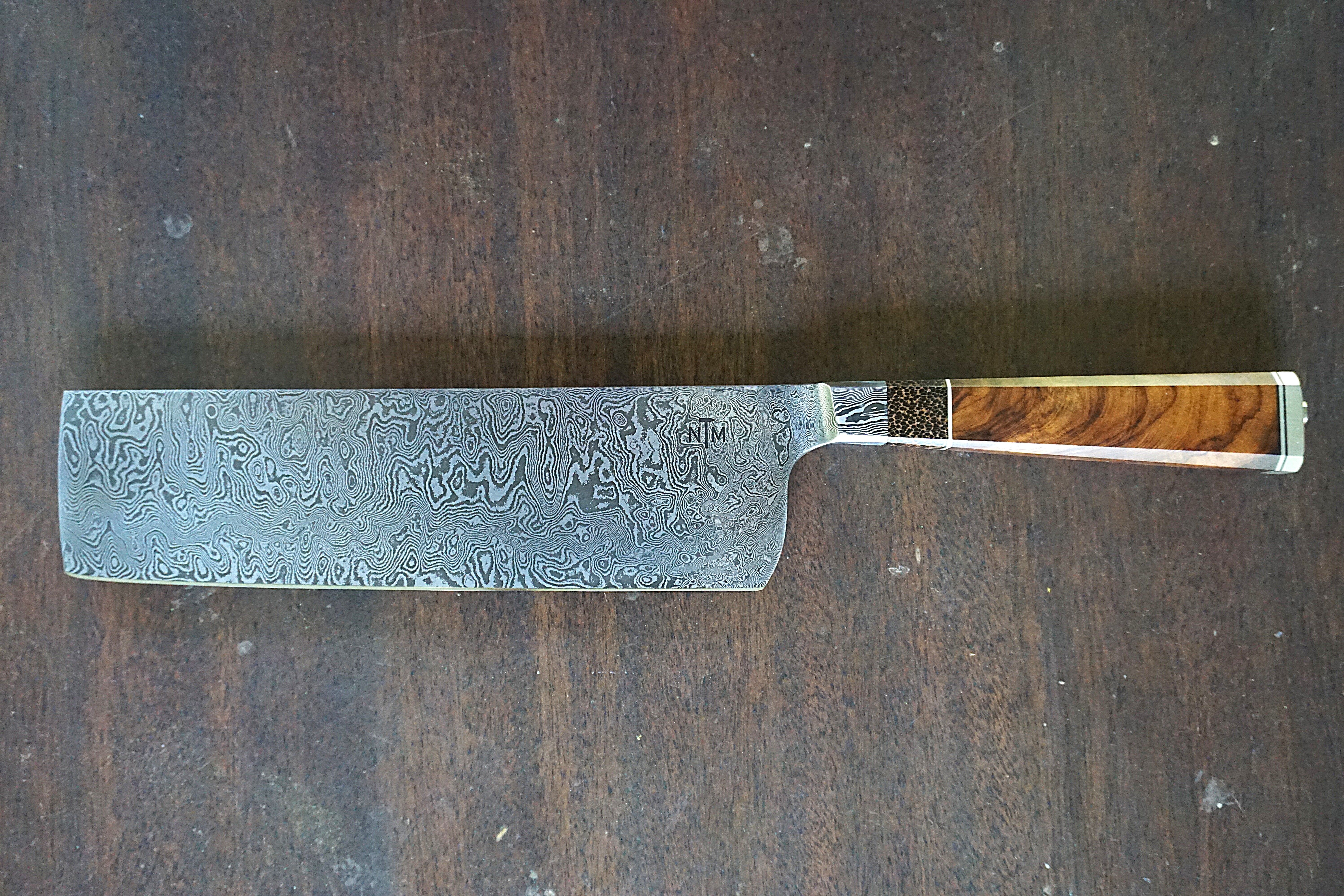
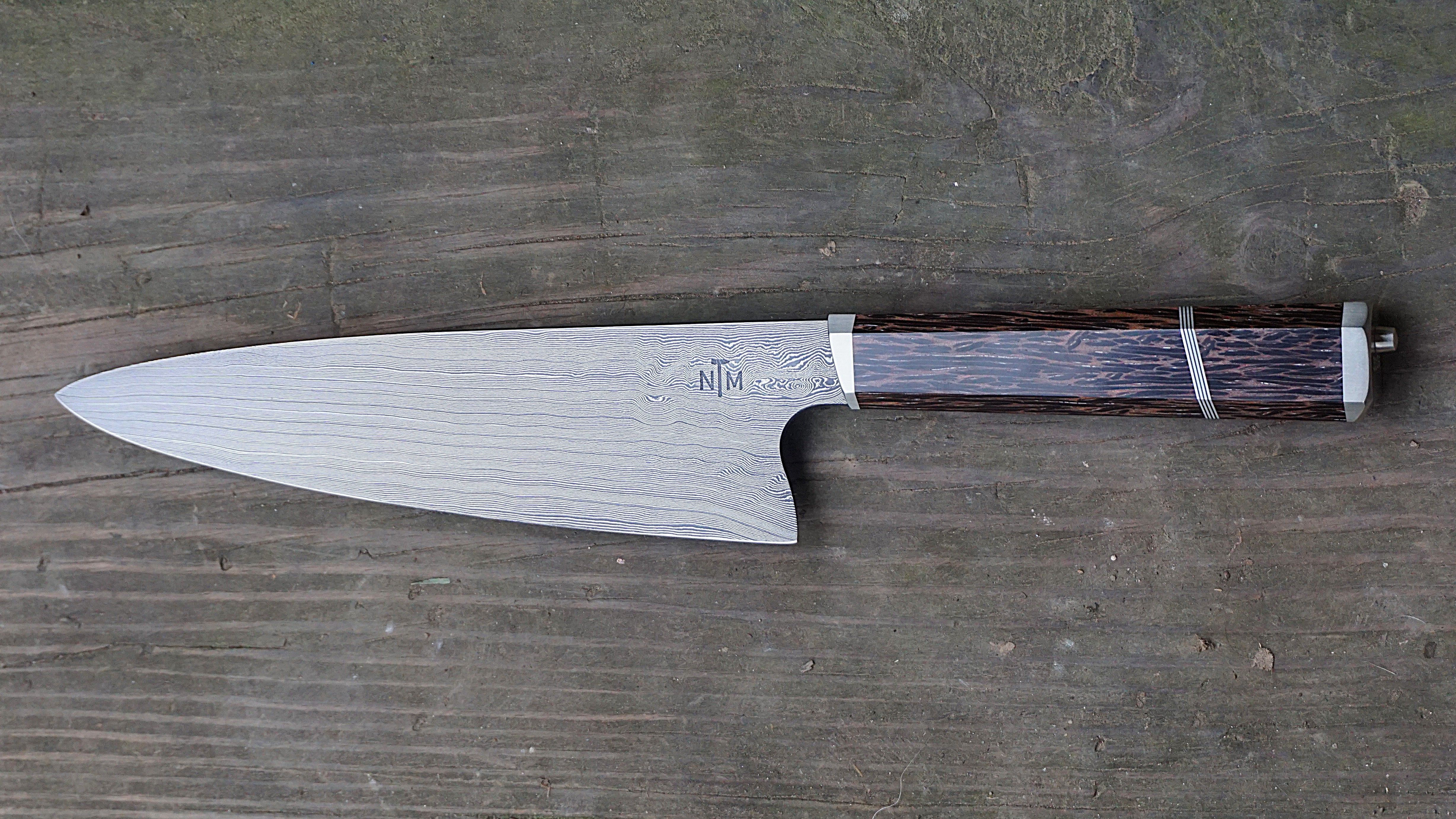
I use both stainless and non-stainless steel, and I always strive to heat-treat my knives for maximum performance. I also forge my own Damascus steel, and I experiment in differential heat-treating techniques.
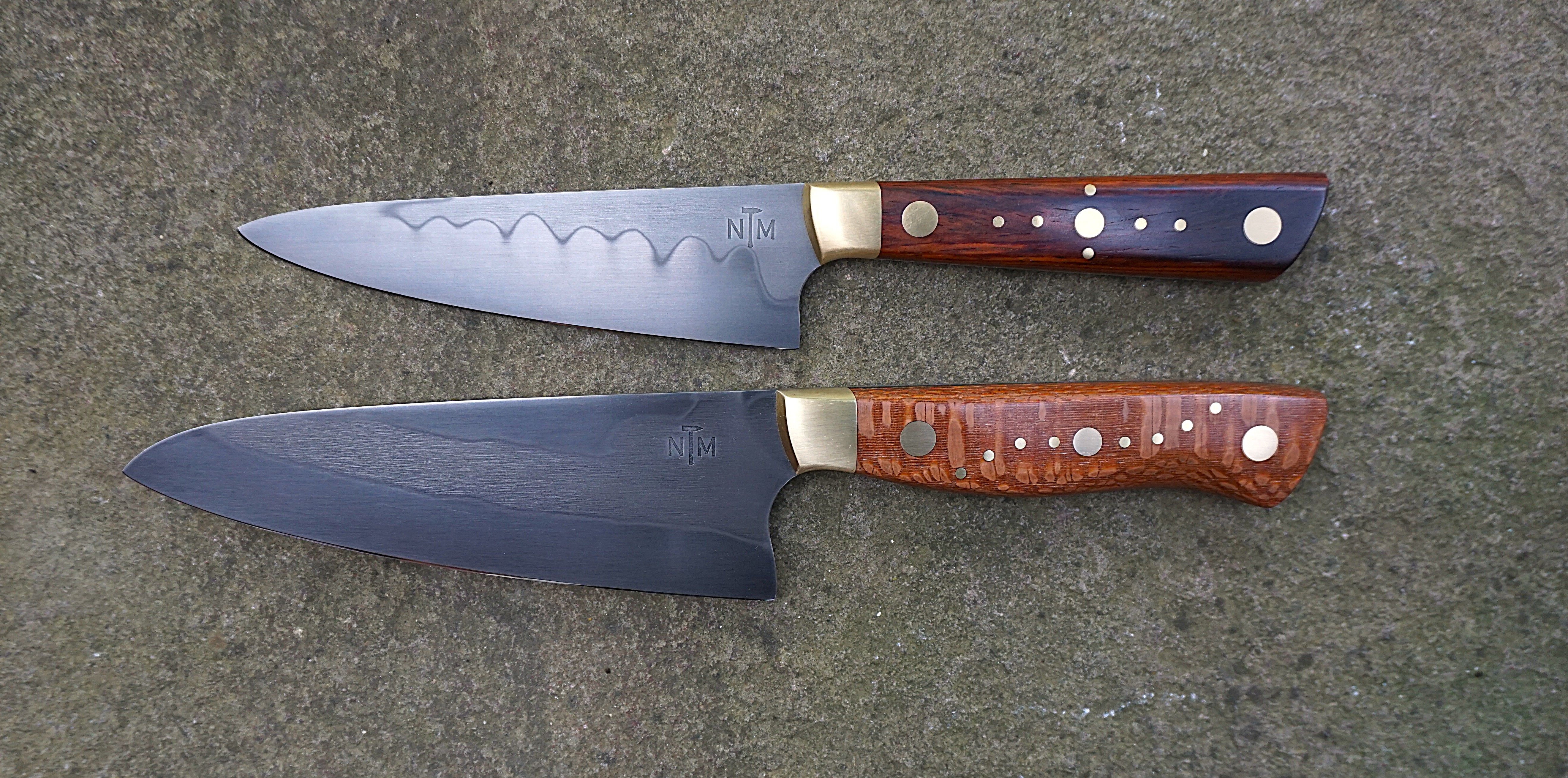
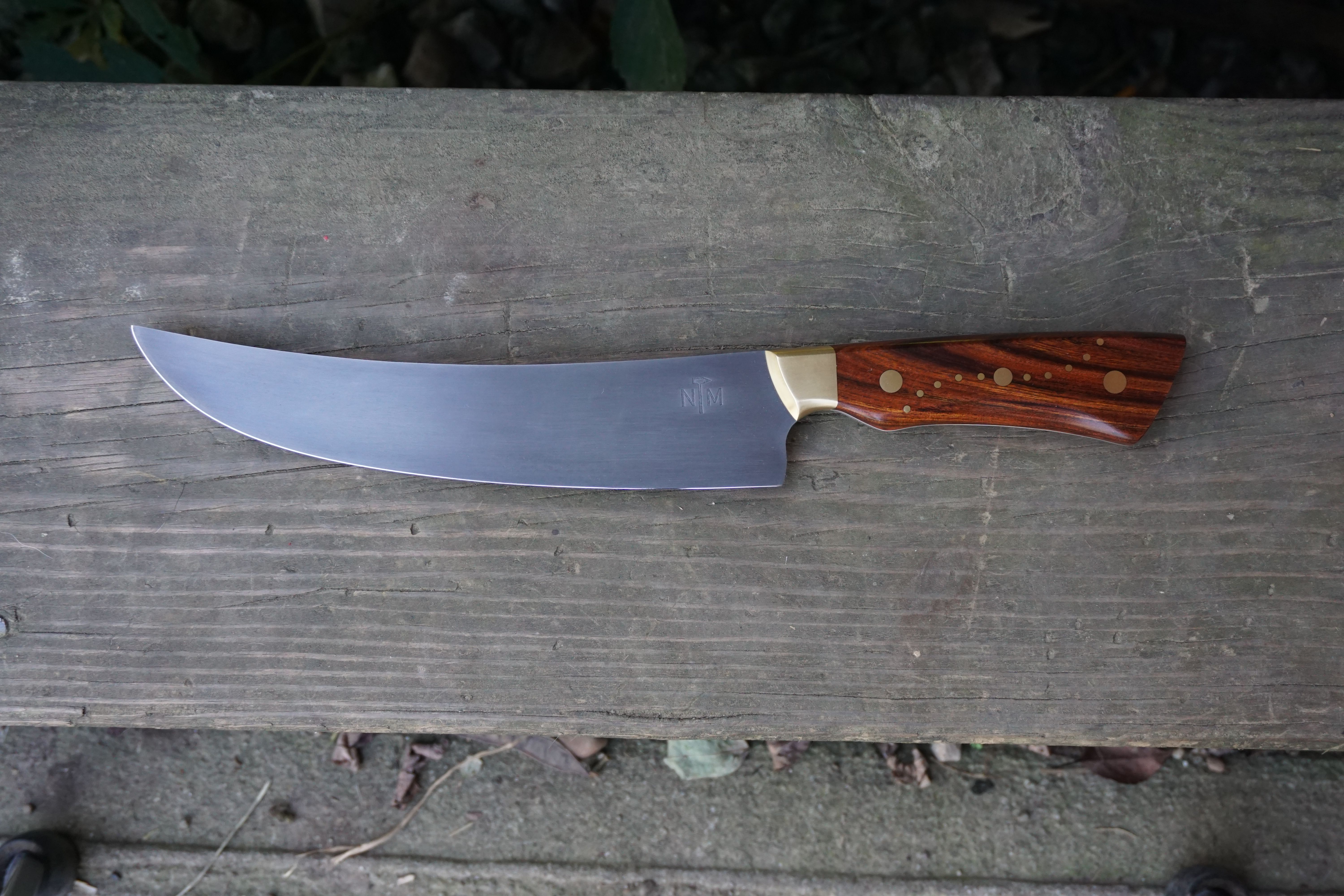
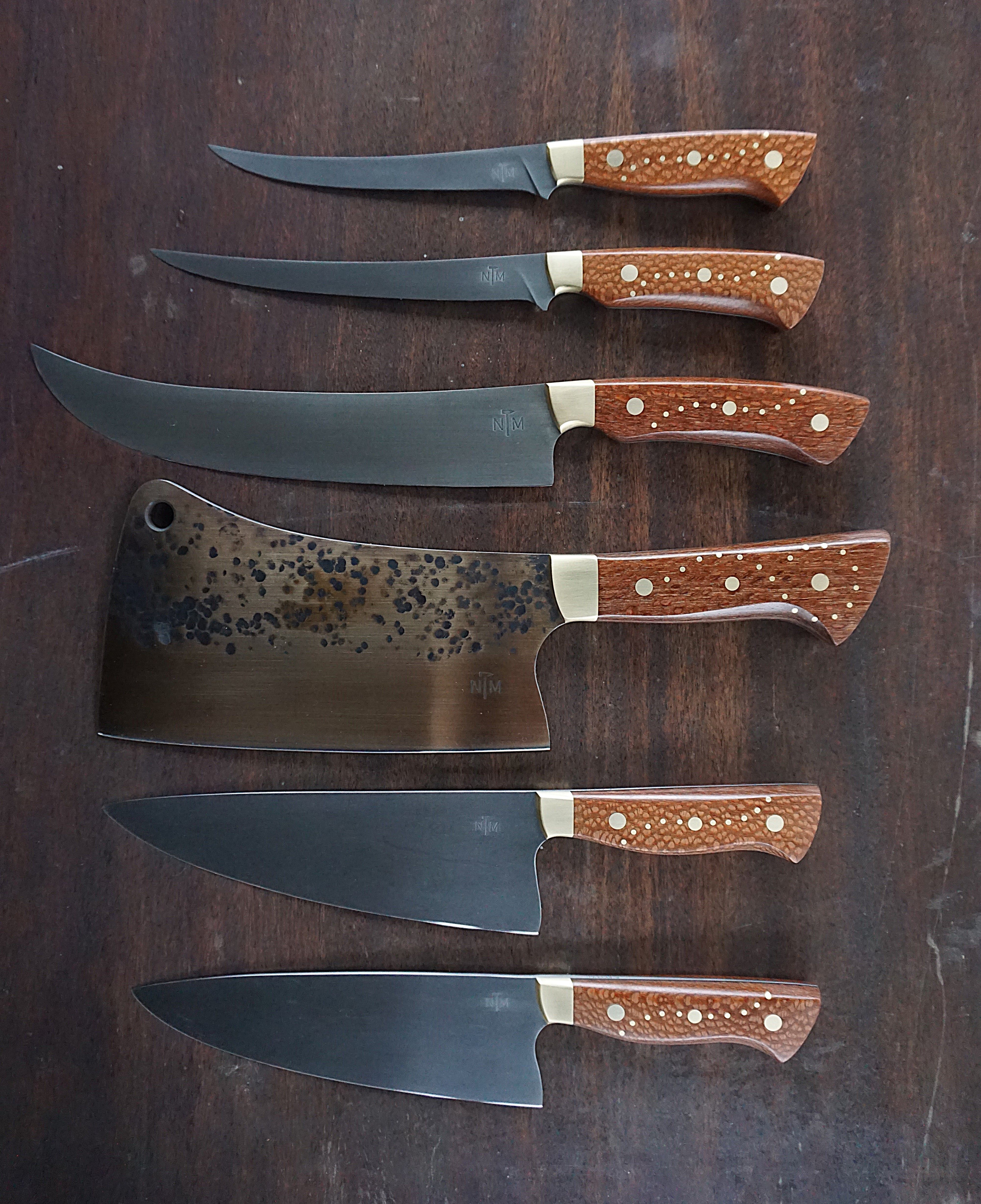
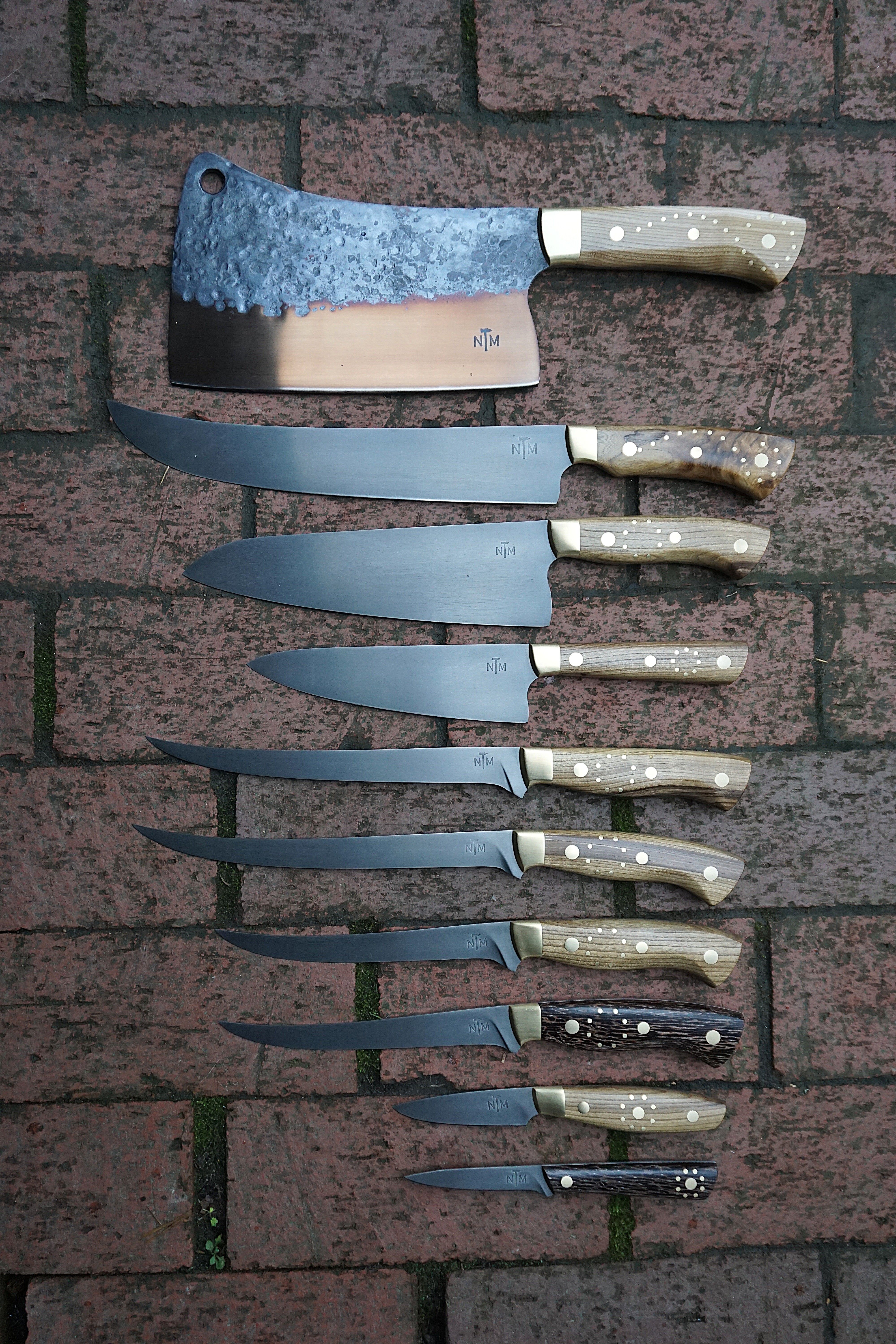
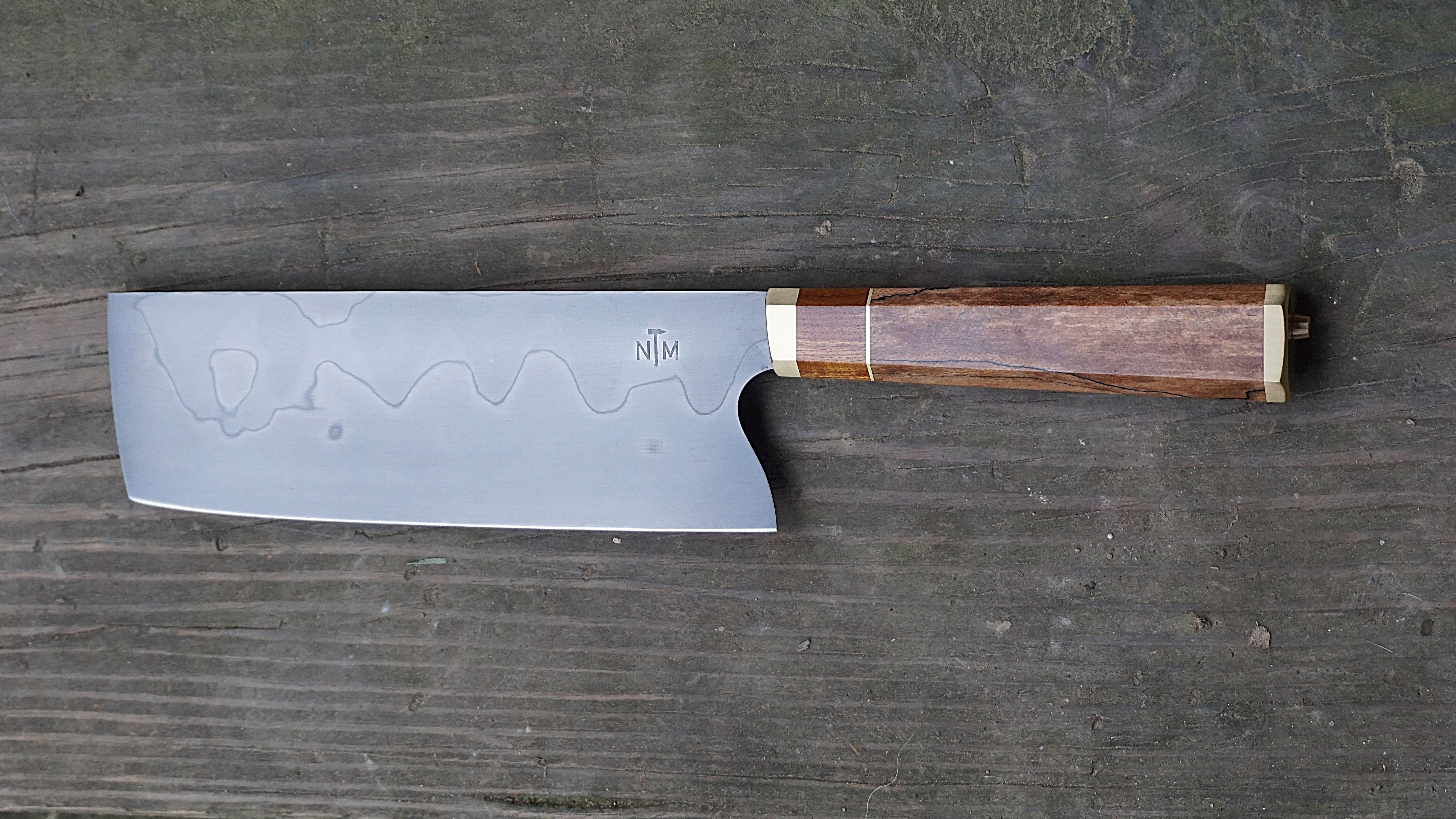
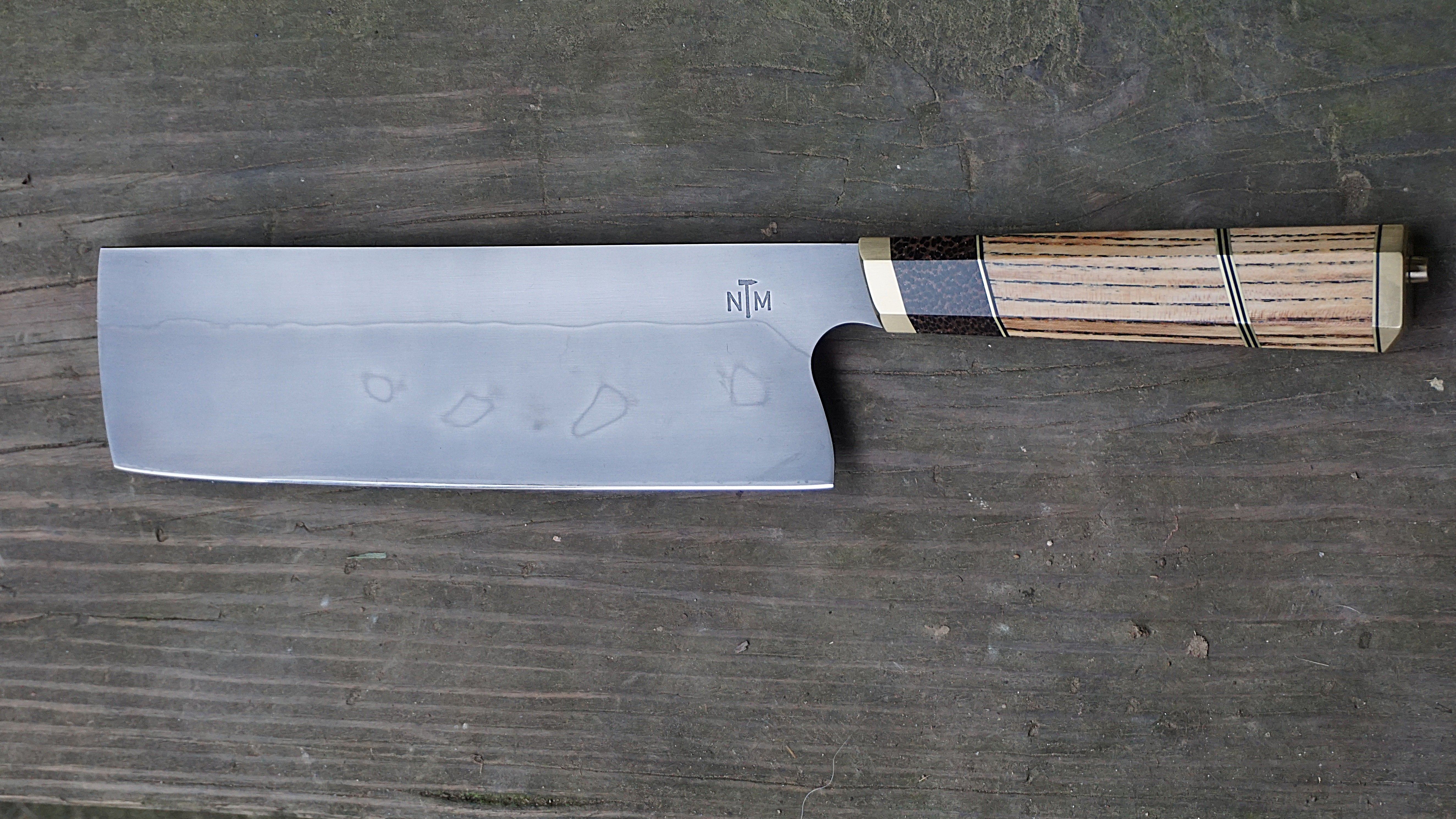
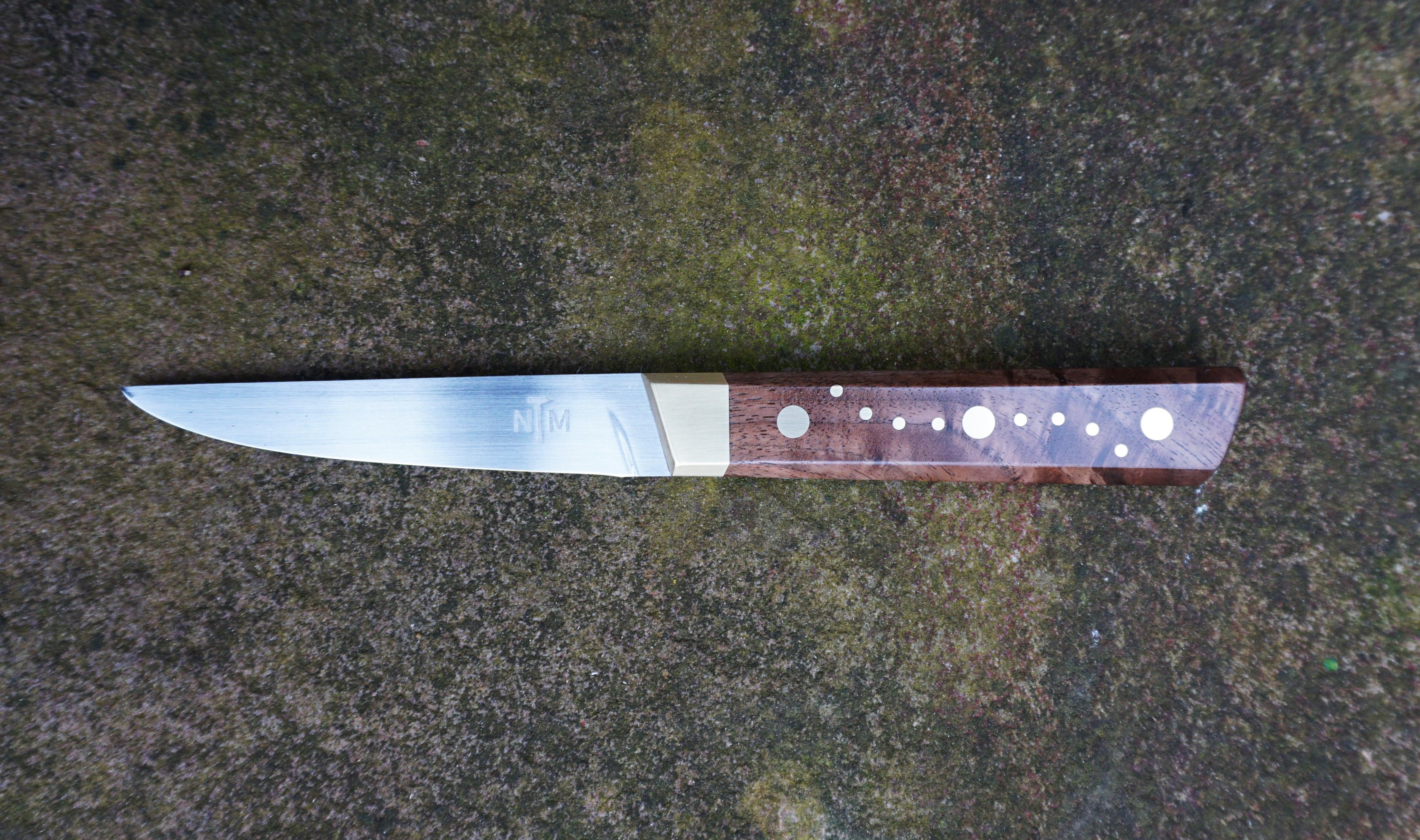
In addition to using exotic hardwoods for my handles, I use wood from felled trees on my family’s property. Black locus, walnut, and elm all make great handles if properly dried and stabilized. The wood scales and bolsters are riveted to the knives using brass or stainless pins.
Gallery
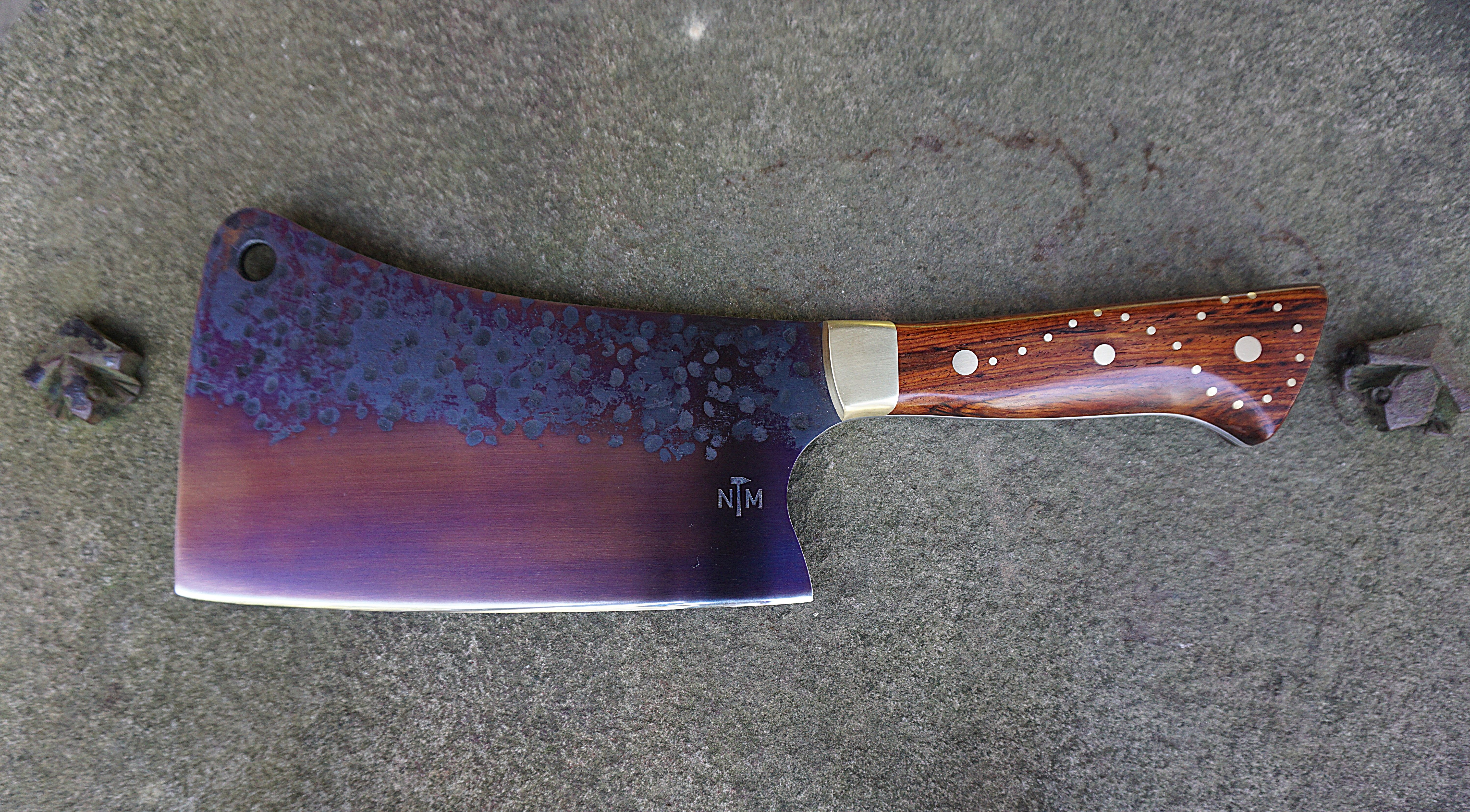
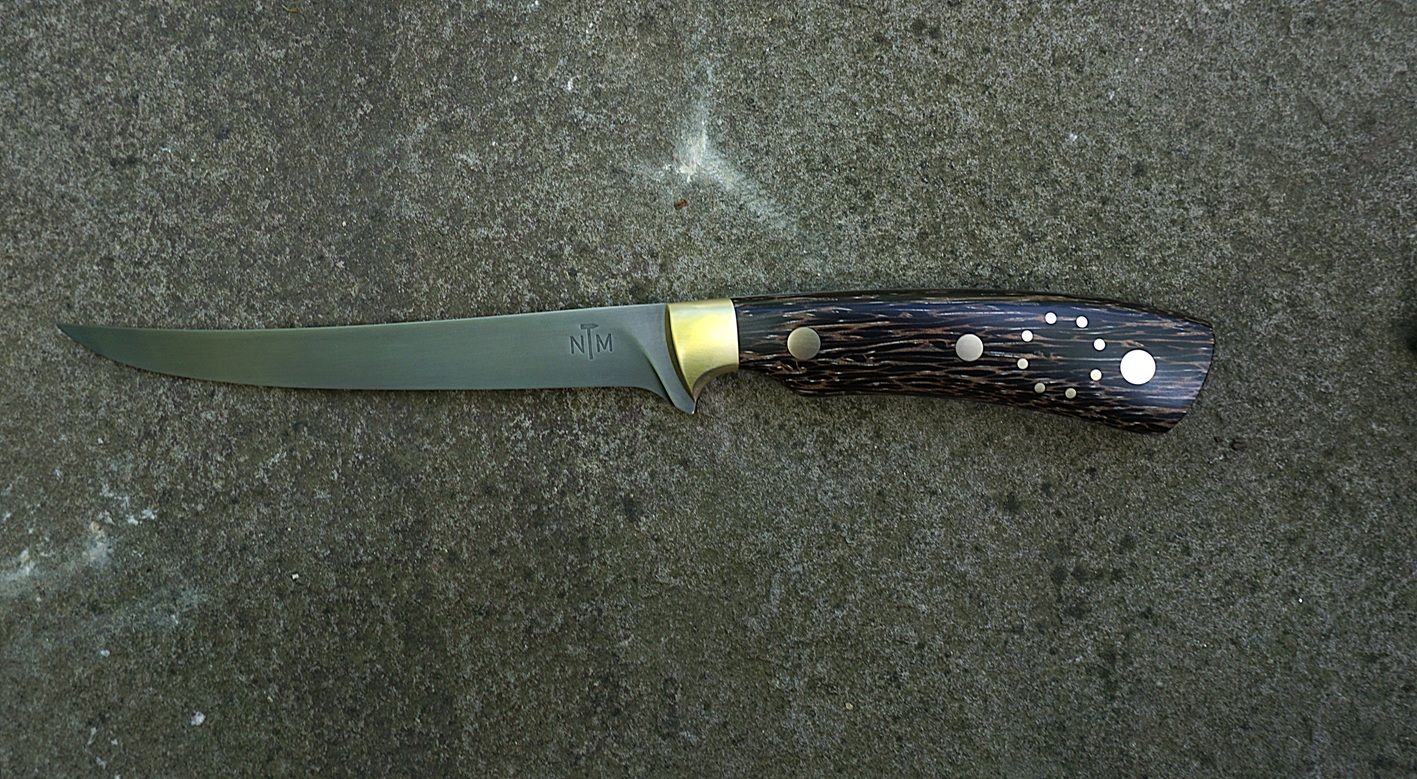
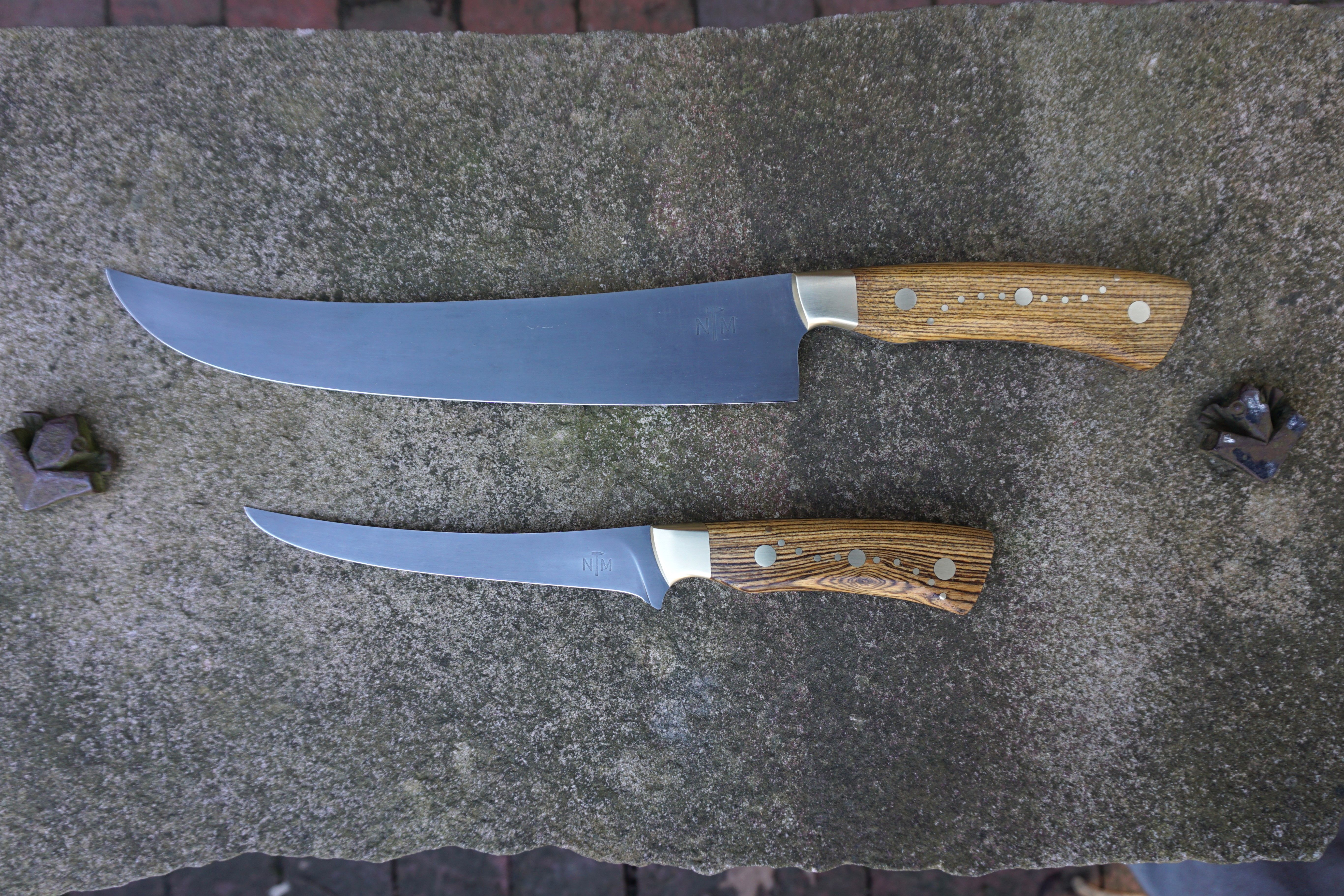
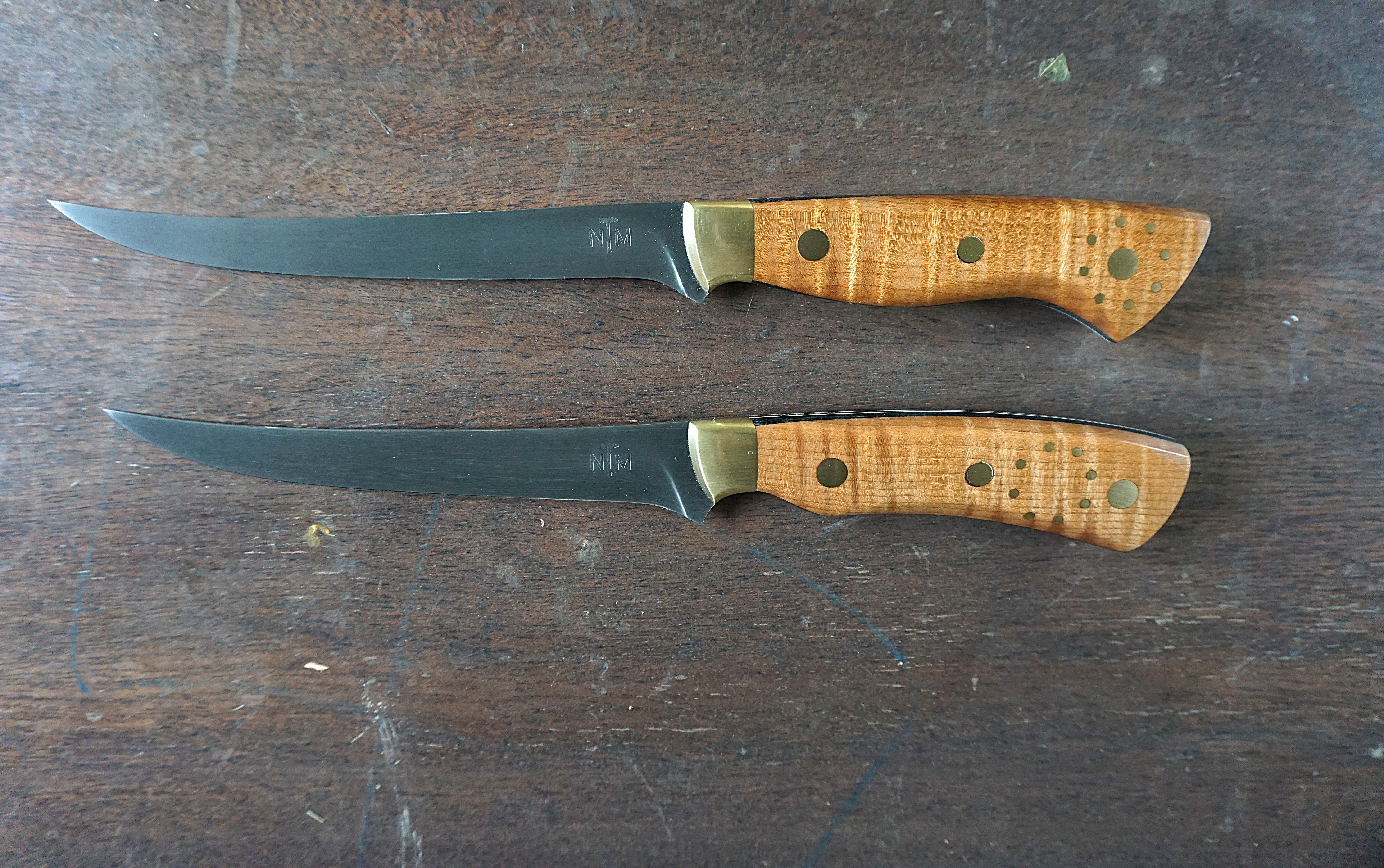
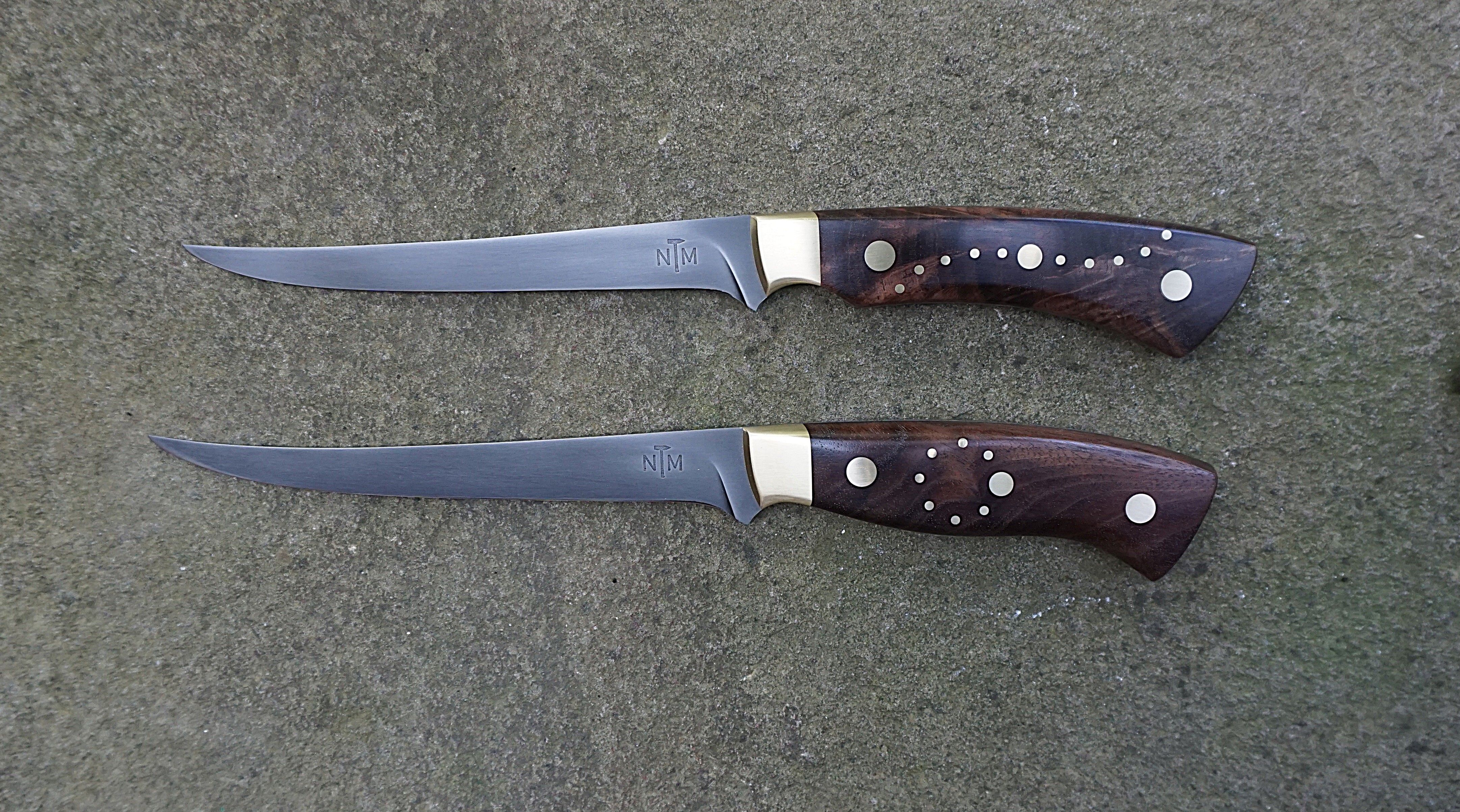
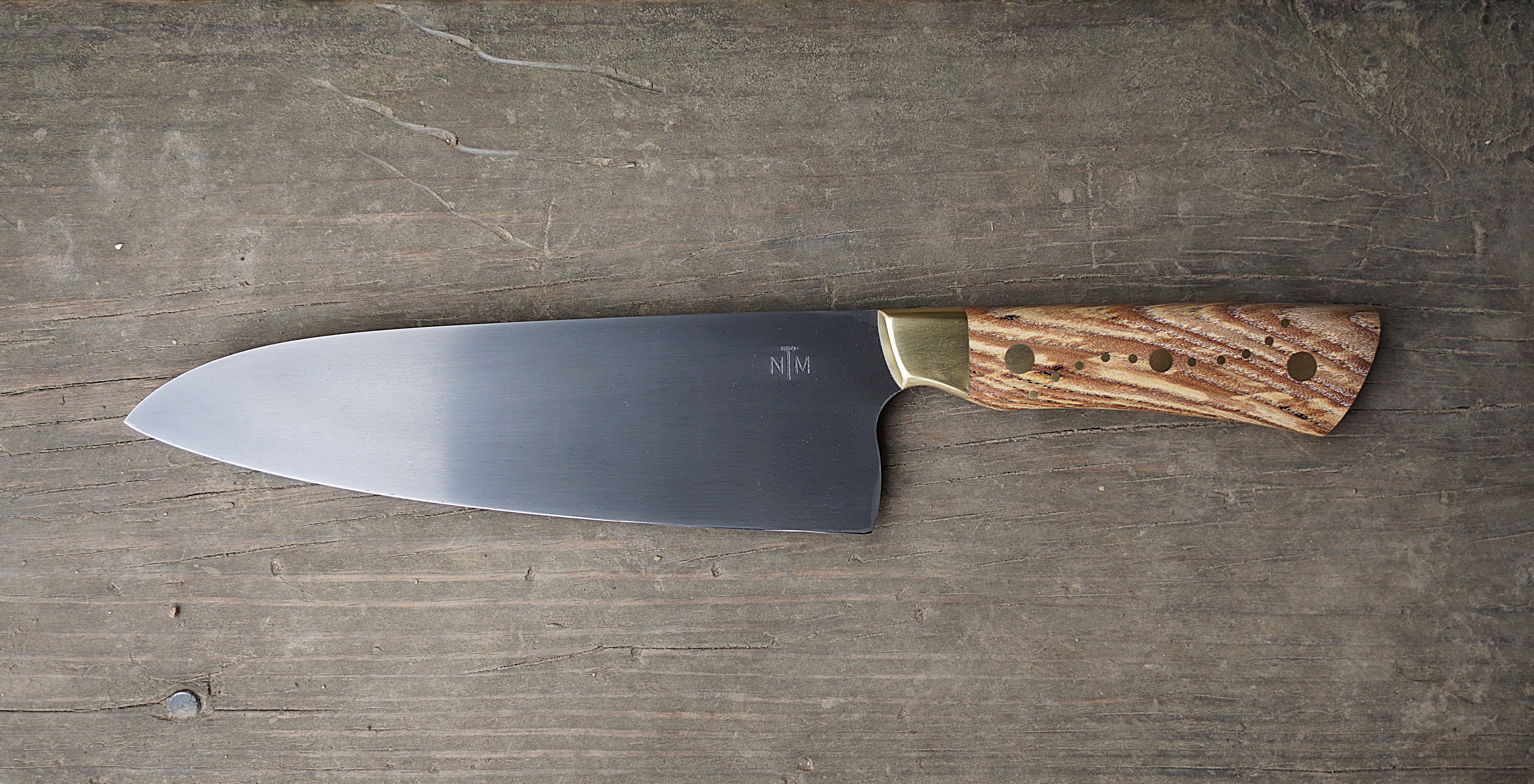
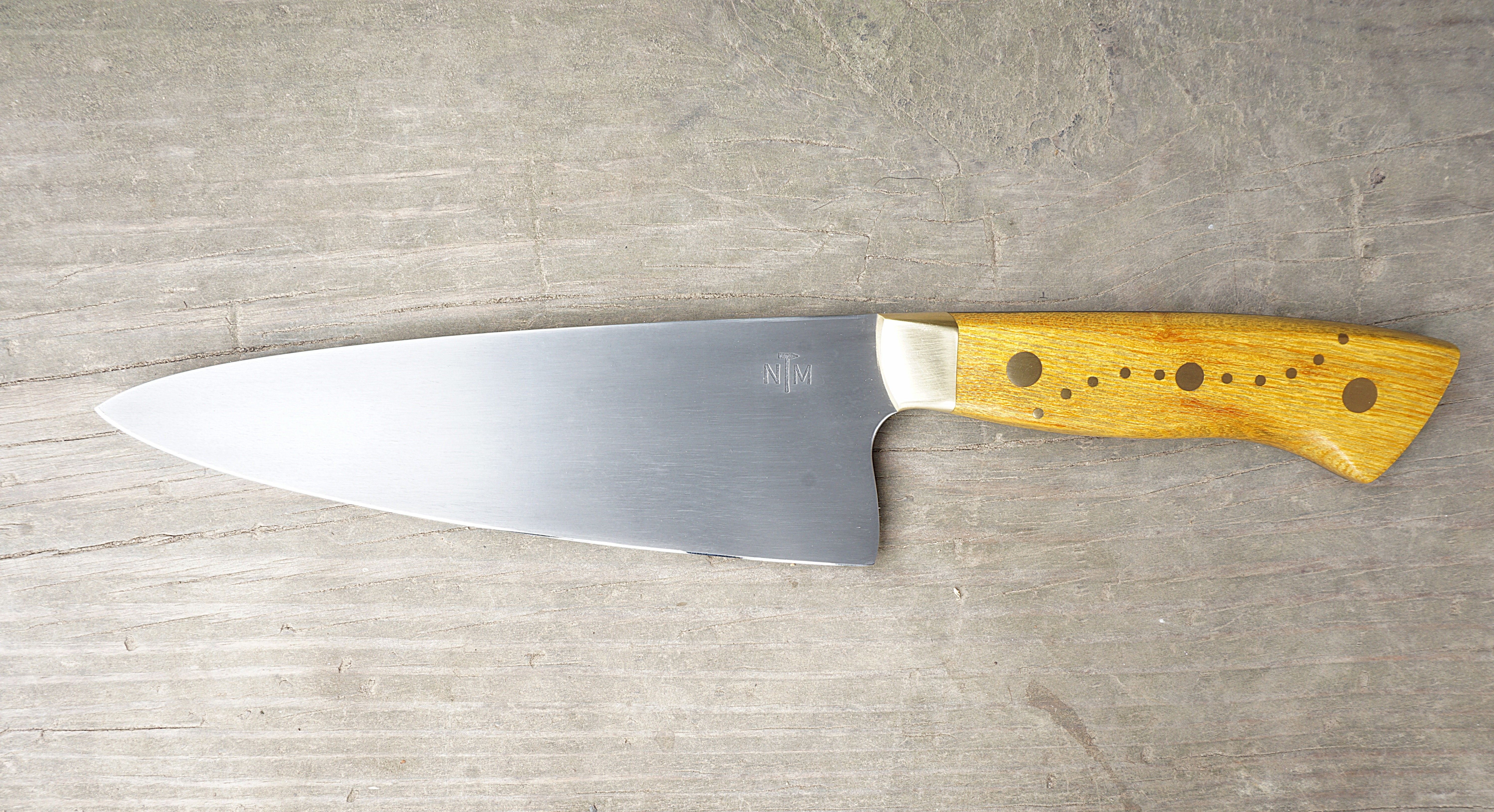
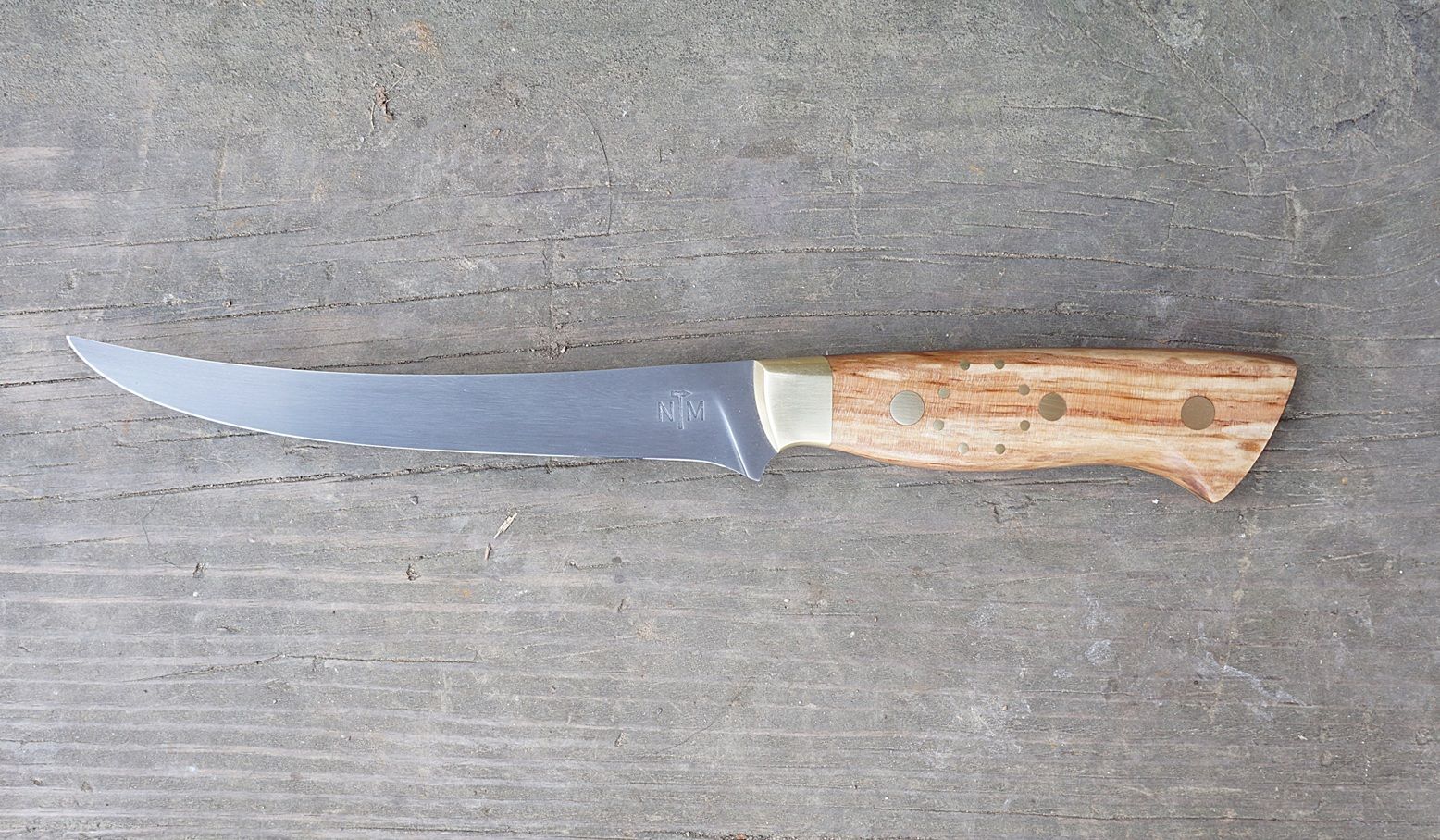
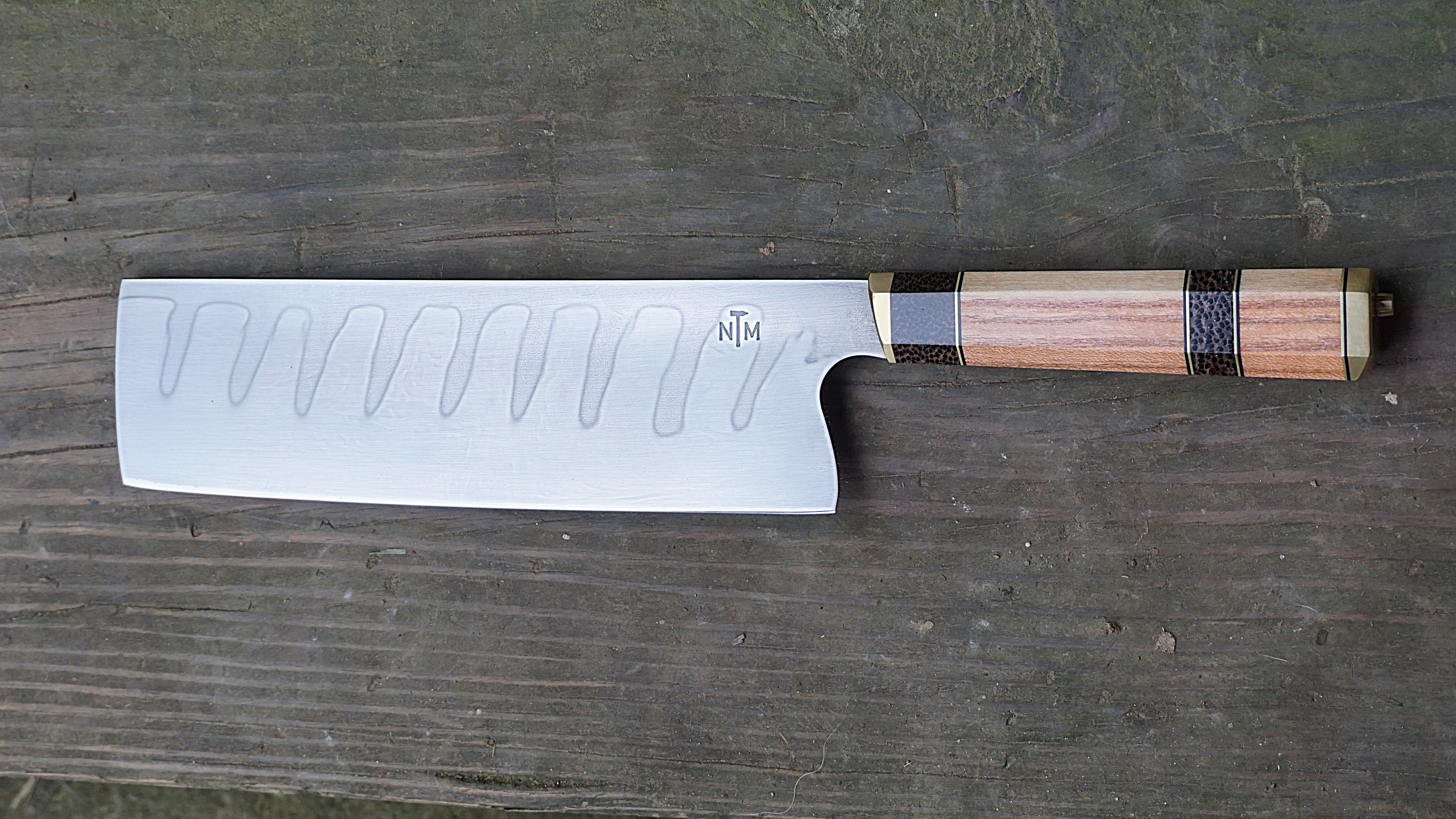
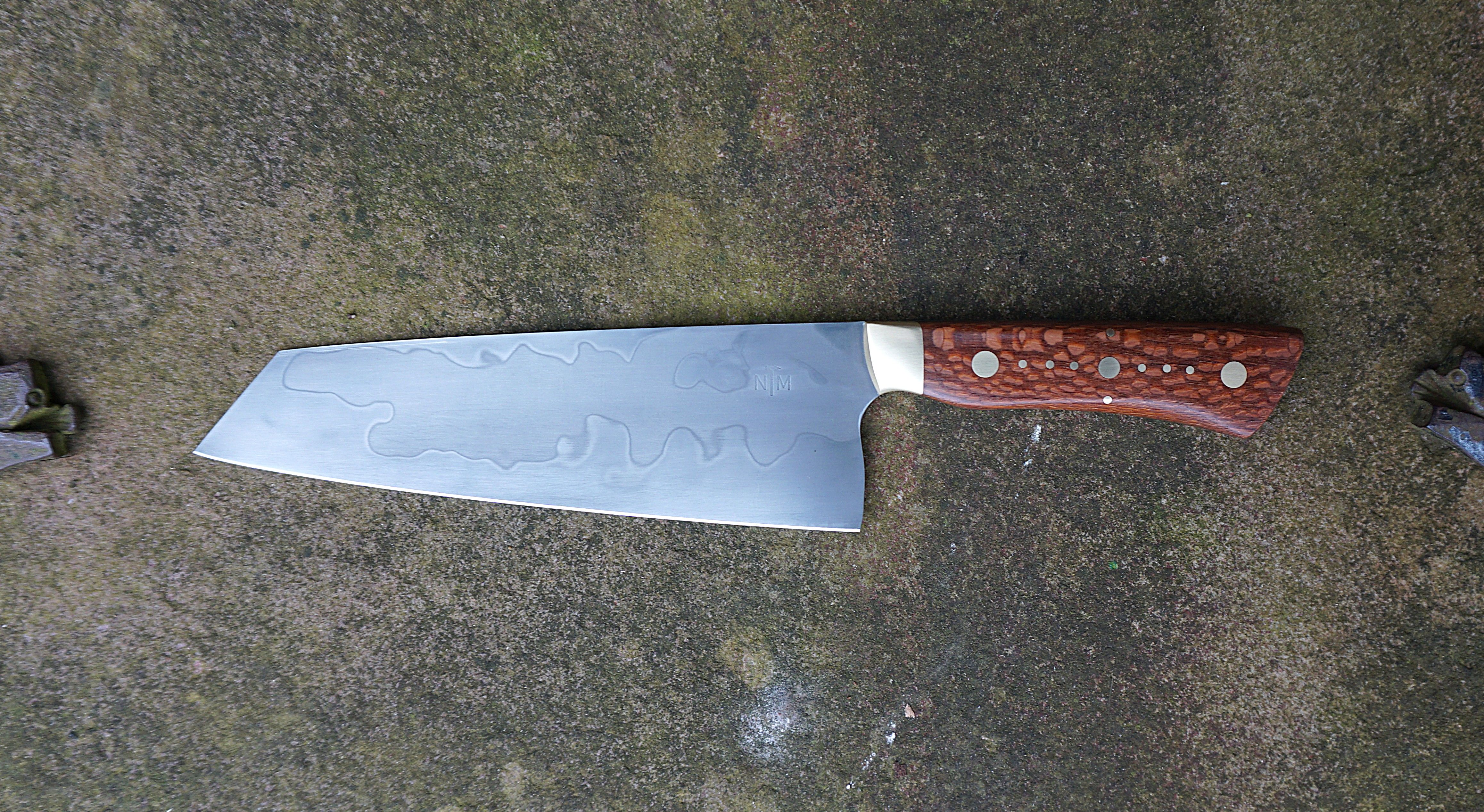
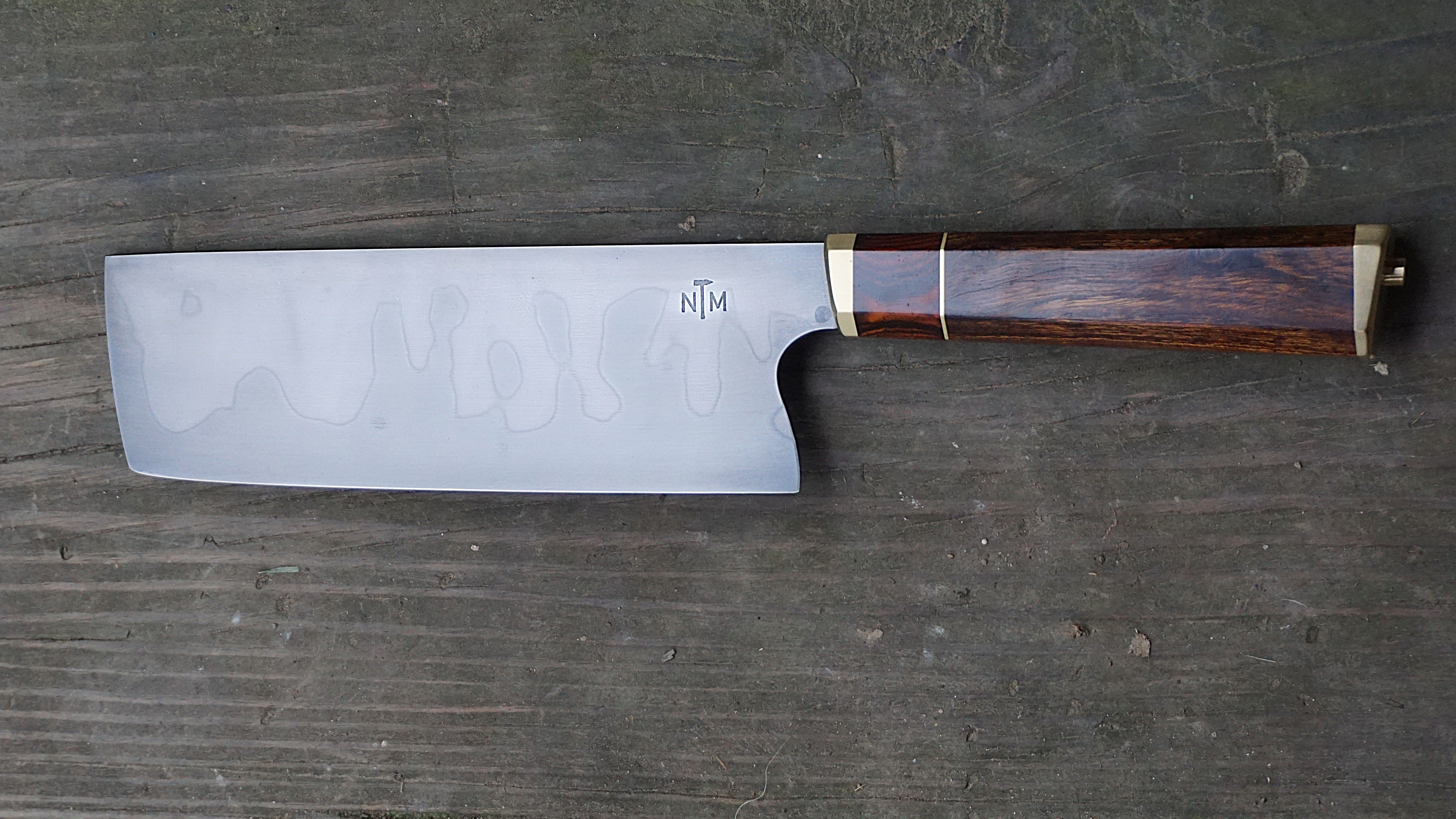
This gallery features a sample of knife styles and materials.
Pricing
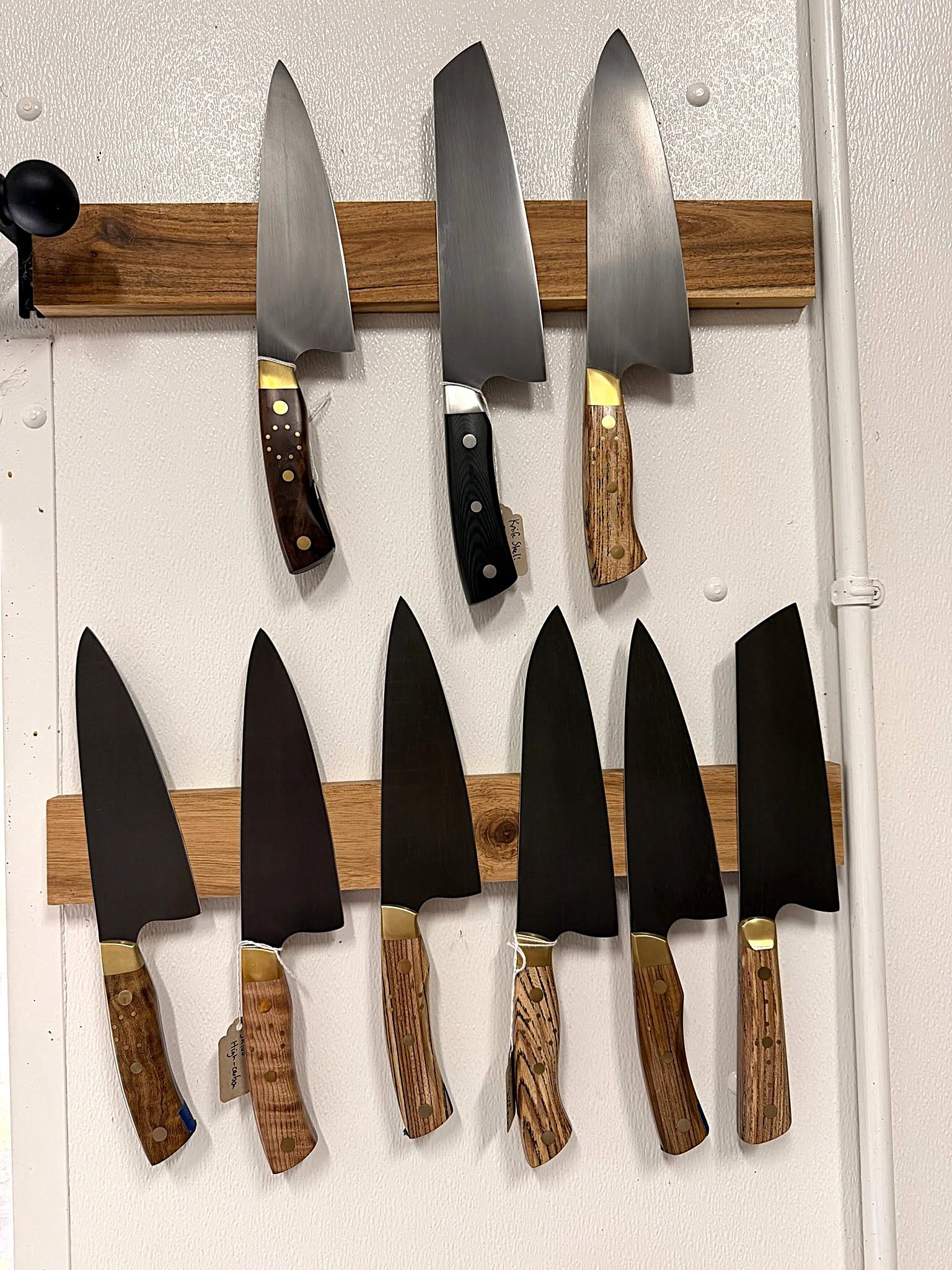
The price for all knives increases for more complex handle designs (e.g. hidden tang), for a Damascus steel blade, or for a differentially hardened blade.
Chef's Knives
For each inch over 8, add $25. A 9-inch-blade chef's knife would be $325.
For each inch under 8, subtract $25. A 7-inch chef's knife would be $275.
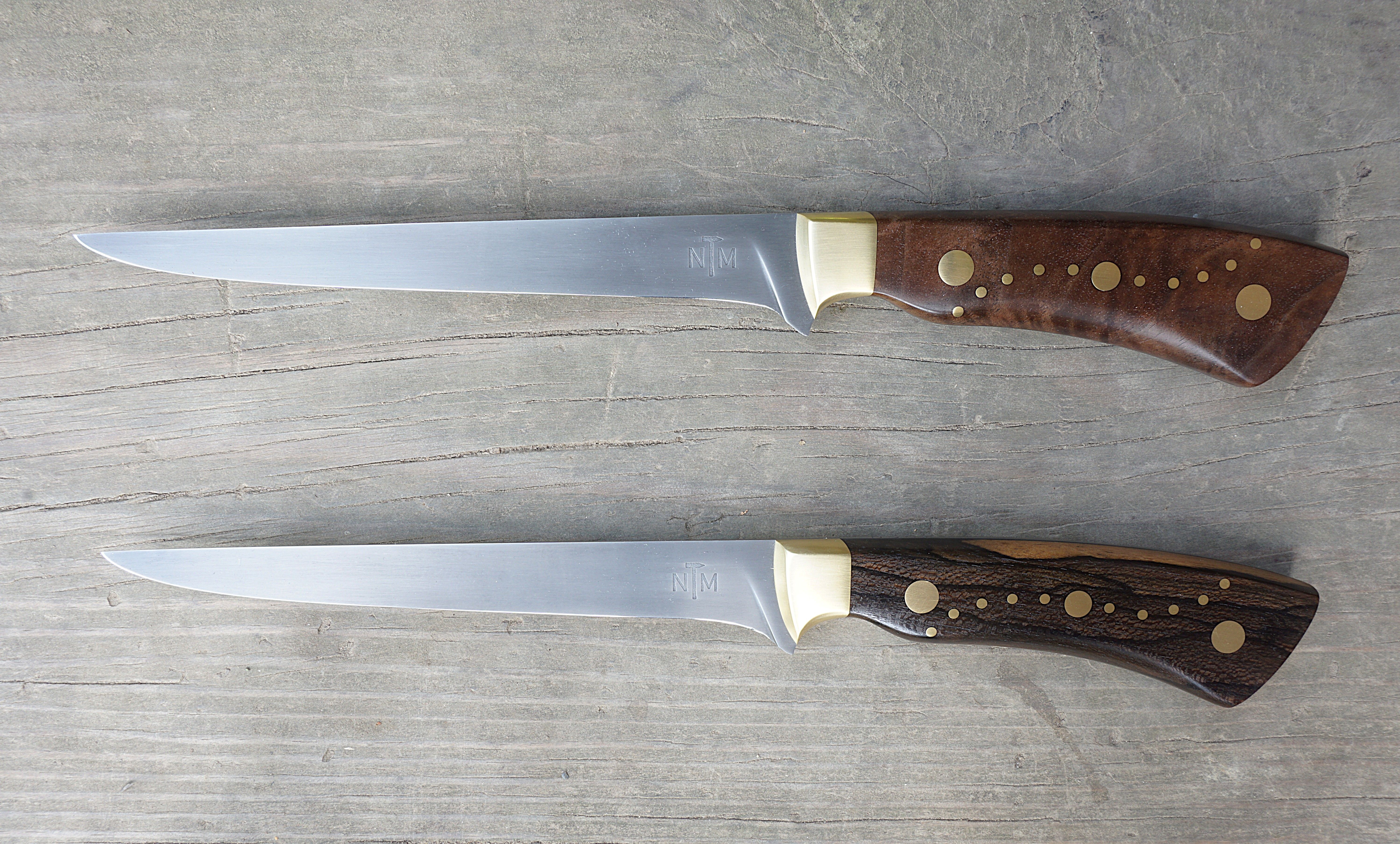
Boning Knives
For each inch over 6.5, add $25.
Steel Type, Care, and Knife Sharpening
Choosing the right steel, caring for your knife, and keeping your knife sharp.
High-carbon, non-stainless steel knives are made of steel which has a low or non-existent chromium content.
These knives need to be kept dry when not in use in order to prevent excessive tarnishing or even rust. High-carbon steel knives will eventually form a patina, which some people say lends character to the knife, and other people don’t like. Basically, high carbon knives need to be cared for, like any good tool.
The advantage of high carbon steel is that it is generally easy to sharpen, and it takes a keen edge. All of the knives I use in my kitchen are high-carbon, non-stainless steel.
Stainless steel knives are made from steel with a high chromium content (generally 13% or more), and are more common in modern kitchens.
Of course, the advantage of stainless steel is that the knife will not form a patina, and you don’t need to maintain them as carefully (although even stainless steel knives can rust if utterly neglected).
Stainless steel knives can be more difficult to sharpen, depending on the particular steel alloy.
Proper care for your knife involves cleaning and drying the blade after use. Never put your knife in the dishwasher. Doing so is dangerous, can dull the blade, and can damage the handle.
If your knife develops unwanted oxidation, you can rub the knife with a Scotch-Brite non-scratch pad dipped in dish soap. For a more aggressive approach, you can use extra fine steel wool or a normal Scotch-Brite pad.
Brass and/or stainless fittings can be restored to full shine by polishing with extra fine steel wool. The handle should be conditioned occasionally with a food safe oil.
I advise periodic use of a honing rod to realign your knife's edge. A honing rod can keep a knife sufficiently sharp for months, but eventually, you will need to actually sharpen your knife.
For sharpening, a ceramic pull-through device like those found in many kitchens will work to keep a decent edge on your knife. However, these devices will not bring your knife's edge back to razor sharpness. Water or oil stones can achieve this. These stones come in a variety of grits, and the basic idea is to start your sharpening on a lower grit and then work your way up through finer, higher-grit stones.
When I first sharpen an unsharpened knife, I start with a 220 grit stone and then work my way up to a 8000 grit stone. This final 8000-grit stone puts a very sharp edge on a knife. If you're sharpening a knife that has already been sharpened and just needs a touch-up, then you can start at the higher grits, and the process takes much less time. Once I’m finished with the 8000-grit stone, I strop the knife on a piece of leather, which knocks off any remaining micro-burr and leaves the knife with a razor-smooth edge.
Getting the sharpening technique down takes some practice, but it's not terribly difficult. You can watch a few YouTube videos to get an idea of the technique, and you may want to practice a bit on knives you don't like much.
If you are interested in a custom knife, please email me, and I will put you on my list. For that or any other questions, email me at: nmalenke@gmail.com. Thanks and take care!